- 24/7
Customer Service
- ISO 9001
Certification Company
- Qualified
Expert Professional

SPW GASKETS
- Industrial
SPIRAL WOUND GASKETS
Spiral Wound Gaskets
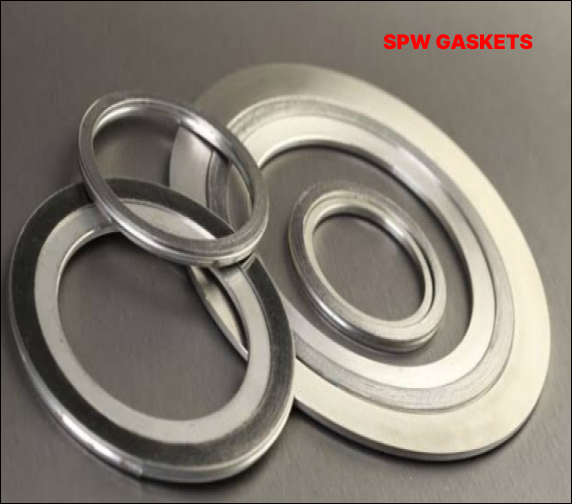
A Spiral Wound Gasket is the most common metallic gasket used in industrial plants. A properly selected and installed spiral wound gasket can withstand high temperatures and pressures, preventing leaks throughout their intended lifespan.
A spiral wound gasket consists of three elements:
- Outer ring. Made of carbon steel, this outer ring is sometimes called the centring ring or guide ring. It’s used to centre the gasket when you insert it into a bolted flange joint.
- Inner ring. The inner ring is pivotal for the gasket because it prevents windings from buckling inside the pipe. When a gasket buckles, parts of it get sucked into the pipe. From there, pieces of the gasket will typically flow through the pipeline until they get caught on something. Often, they’ll get wrapped around rotating equipment like a pump. The mess that results is known as a “bird’s nest.” Inner rings help you avoid this problem.
- Sealing element. As you might guess from the name, the sealing element creates the seal that prevents leaks. A sealing element encompasses both windings and filler material. Most spiral wound gaskets in oil and gas refineries will use a flexible graphite filler material rated for high temperatures. A flexible graphite filler also allows the gasket to be more tolerant of flange distortion and joint misalignment. Polytetrafluoroethylene (PTFE) is another common filler material. PTFE is not rated for high-temperature applications, however. Meanwhile, most winding materials in refineries will be stainless steel and Monel Spiral Wound Gasket Markings after about 5 years, the industry moved to make spiral wound gaskets the standard in ASME B16.20.
Related Product